
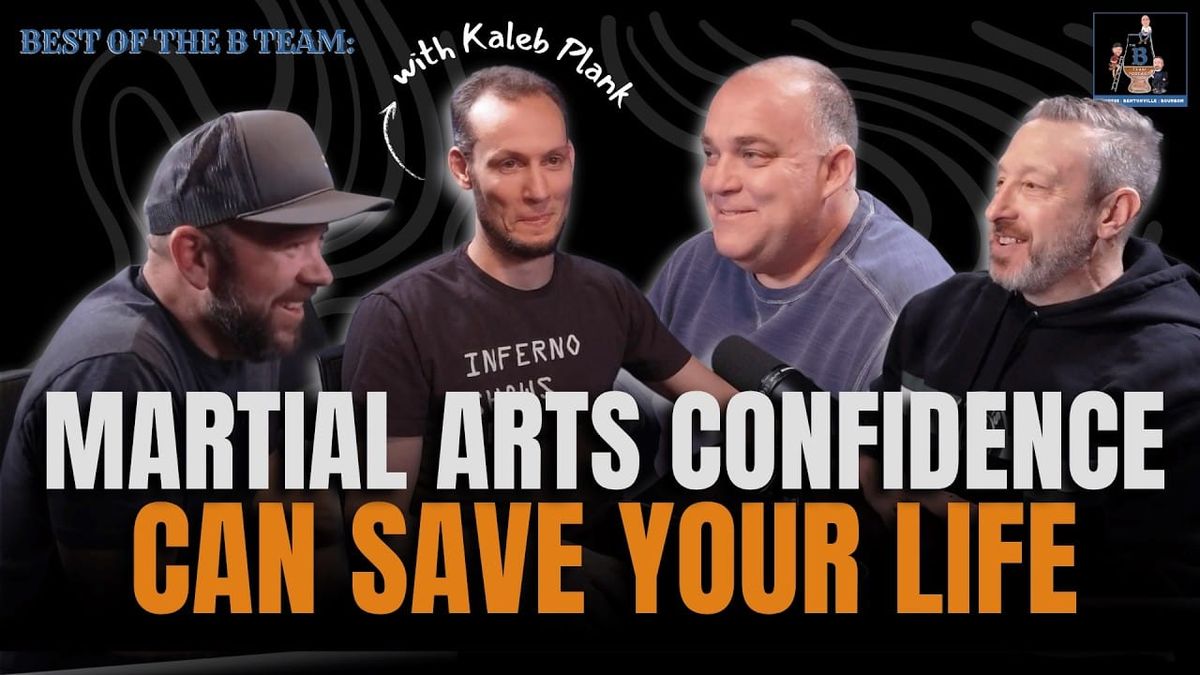
Reactionary movement is the only thing that saves you when a situation turns south. Most people assume that knowing a few moves is enough, but without the muscle memory to back it up, the human brain simply freezes under pressure. We sit down with Kaleb Plank from Inferno Martial Arts to discuss why his program focuses on functional self defense over the sport side of martial arts.
We get into the specific tactical advantages of weapons training, the transitive properties of teaching kids to use items like bicycle locks or rakes for safety, and why his hips toward danger philosophy is the first step in any confrontation. Kaleb explains the importance of moving beyond simple pain responses, such as groin strikes, and focusing on turning the lights off for an attacker using thumbs to the eyes and trachea control. We also dive into the reality of rank testing and how intense environments prepare students for real world stress.
The unglamorous truth is that even the best training cannot account for every wild card, from multiple attackers to the legal aftermath of a physical altercation. You have to be prepared to defend yourself both physically and legally, understanding that a justified action can still carry heavy social and professional consequences. Walking away with a mindset shift on how to regulate fear is just as important as the physical strike itself.
More About this Episode
The Philosophy of Practical Protection: Why Realism Matters in Martial Arts
When we talk about martial arts training, people often get caught up in the aesthetics of the movies or the high-flying kicks seen in professional sports. However, when you are responsible for the safety and development of hundreds of students, including children, you have to move past the flash and get down to the brass tacks of what actually works. My name is Kaleb Plank, and at Inferno Martial Arts, our mission is built on a foundation of functional movement, community, and, above all else, legitimate self-defense.
One of the most common misconceptions I encounter is that martial arts is purely about the physical techniques. While knowing how to throw a punch or sink a rear naked choke is vital, the philosophy of protection starts much earlier. It starts with the equipment you use, the mindset you cultivate, and the environment in which you train.
The Danger of Cutting Corners
I recently had a conversation with a parent who, with the best of intentions, tried to save a few dollars by making their own training equipment. They took some closet rods and fashioned them into sticks for our weapons program. While I appreciate the thriftiness and the effort to be involved, I had to pull them aside for a serious conversation. In the world of Kali or Arnis, we use rattan sticks for a very specific reason.
Rattan is a fibrous, flexible wood. When it wears out, it frays. It does not snap or splinter into sharp shards. If you take a piece of hardwood, like a closet dowel or a broomstick, and start whacking it against another stick at high velocity, it will eventually break. When hardwood breaks under that kind of stress, an eight or twelve inch piece of jagged wood can fly across the room. That is how someone ends up with a permanent eye injury.
I know this because when I was a broke kid back in Clarksville, my buddy Mike and I tried the same thing. We thought we were being smart, but we were just being dangerous. In martial arts, safety is not an inconvenience; it is the prerequisite for progress. We use specific tools because they allow us to train with intensity without sending someone to the emergency room. Whether it is an eight dollar rattan stick or a high quality pair of gloves, the gear is an investment in your ability to keep showing up tomorrow.
Beyond Jiu-Jitsu: The Necessity of Striking
Right now, Brazilian Jiu-Jitsu is the king of the martial arts world. It is the trend, the factor, and arguably the most effective grappling system ever devised. We love it, and we teach it. But I am a firm believer that if you are teaching children, your first priority must be raw self-defense.
If someone tries to snatch a child and stuff them into a van, that child does not need to be thinking about how to pull guard or sweep someone for points. They need to know how to punch, kick, lean, and elbow. They need to know how to take someone down and, if necessary, how to use transitive properties of their training to defend their life.
We teach our kids to use "nut-chucks" and bo staffs not just because they are fun, though every kid loves feeling like a ninja, but because those skills translate. If a kid knows how to swing a nunchaku, they know how to use a bicycle lock or a heavy chain to keep a predator at bay. If they understand the mechanics of a bo staff, they can pick up a broomstick, a rake, or a shovel and have a functional weapon in their hands. There are underlying meanings in our curriculum that even the parents do not always see. We are teaching them to turn everyday objects into tools for survival.
Structure, Discipline, and the "Bully" Dynamic
A question I get often is: "If you teach these kids how to be dangerous, aren't you just creating bullies?"
The answer is found in structure and discipline. In my experience, when one of our students gets into a physical altercation at school, one hundred percent of the time it has been a situation where they were protecting themselves or someone else who couldn't fight back. We do not just teach techniques; we teach a culture of being a protector.
Interestingly, we often have parents bring in the "bully." These are kids who haven't learned how to regulate their emotions or their physical strength. When you put a child like that into a structured environment where they have to say "Yes, sir" and "No, sir," and where they are held accountable by instructors and peers, they change. Martial arts provides a release valve for that energy and replaces aggression with respect.
We disguise the hard work. We make it a good time. But the intensity is real. Our advanced rank testings are separate from the white and yellow belt tests for a reason. By the time a student reaches those higher ranks, the level of intensity and the expectations for their conduct are on a different plane. They aren't just learning to fight; they are learning to lead.
The Reality of the Street: Hips Toward Danger
When we move into the realm of adult self-defense, we have to deal with the "freeze" response. Most people, when faced with a sudden violent encounter, freeze because they have never experienced that level of pressure. The reason we train three times a week is to make the response reactionary. We want the body to move before the brain has time to panic.
If you are walking to your car and someone approaches you from behind, my first piece of advice is always: hips toward danger.
You never want a threat behind you. You are strongest when the threat is in front of you, where you can see, reach, and strike. By turning your hips toward the danger, you square up and gain the ability to use your full body weight.
Once you are facing the threat, you have to be clinical. I teach my students to focus on the eyes, the throat, and the ears. While many people think of the groin as the primary target, I view a groin strike as an "adjustment." A person on drugs or in a high state of adrenaline might not even feel a groin strike immediately. However, if you can't see, you can't hurt me.
I am a big advocate for the thumb in the eye. If I hit you with my palm on the jaw while simultaneously driving my thumb into your eye socket, I am rattling your brain and taking away your vision at the same time. It is brutal, but in a life or death situation, it is necessary. The goal is to "turn the person off."
Similarly, when it comes to the throat, I tell my students: "Don't choke like you're playing; get a hold of the trachea like it is a water hose and you're trying to shut off the flow." When you grab someone's throat, their eyes naturally open wide in a panic response. That is your opening to finish the job and get to safety.
Defending Yourself Physically and Legally
The final layer of our training is perhaps the most modern. My coach always says, "Defend yourself physically and legally."
We live in an era where social justice and the legal environment are major factors. You could perform a technically legal act of self-defense, but if it is perceived incorrectly by the public or the legal system, your life can still be ruined. Your career can end, and you can face years of litigation.
This is why we emphasize de-escalation and the appropriate use of force. We teach our students to be "force multipliers" only when necessary. If you are carrying a firearm or a knife, you must have the discipline to know exactly when that tool is required and when it is not.
At the end of the day, martial arts at Inferno is about more than just winning a fight. It is about building a community of people who are capable, disciplined, and prepared for the wild cards of life. We train hard so that we never have to use it, but we train realistically so that if the day ever comes, we are the ones who walk away. Be here now, stay safe, and keep training.

Member discussion: