
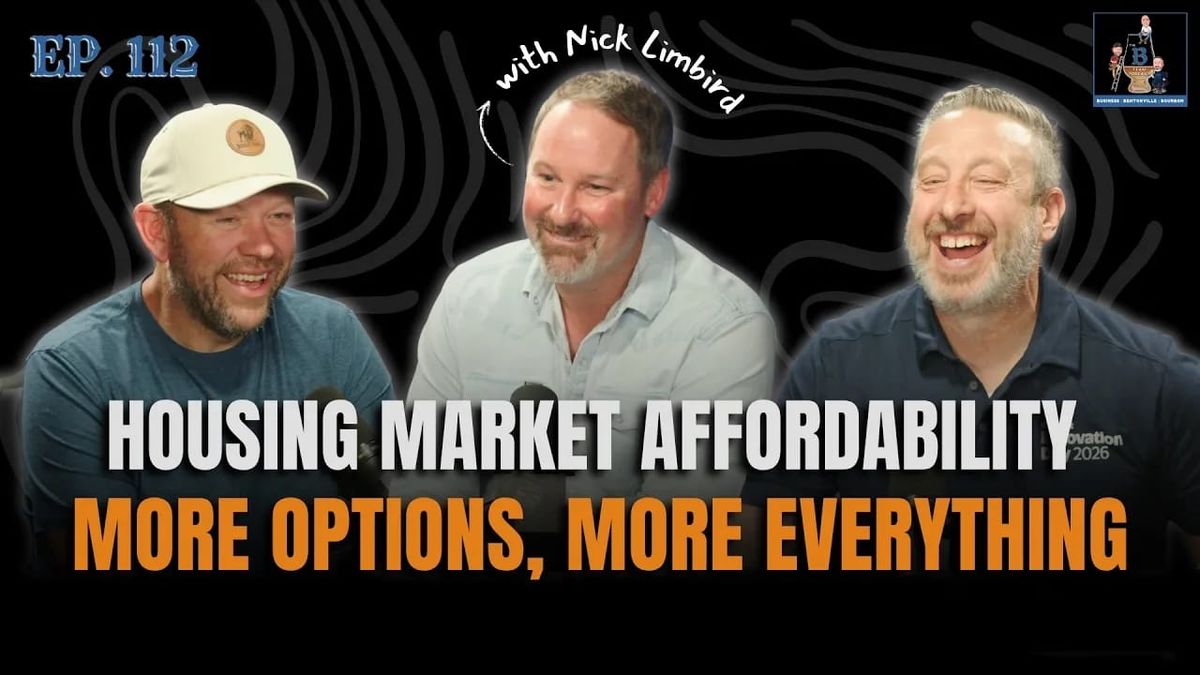
Scaling a business in a shifting economy means ignoring vanity metrics and confronting harsh market conditions head on. In a real estate climate defined by rising interest rates and fluctuating inventory, holding onto outdated strategy guarantees a pipeline full of stagnant listings. We sit down with Nick Limbird, Owner/Broker of Limbird Real Estate Group, to discuss how he transitioned from medical device sales into building Arkansas' top-performing real estate team.
We get into the operational realities of closing 500 to 600 residential transactions annually while managing a portfolio of nearly 500 doors. Limbird shares his tactical approach to guiding stubborn sellers through pricing corrections, prioritizing high-ROI master suite and kitchen upgrades, and structuring profitable house-flipping partnerships with his internal agents. We also look at the economic growth of Northwest Arkansas and why long-term wealth building beats short-term market speculation every time.
Sustaining a top-tier brokerage requires dealing with the messy realities of the business, from firing problematic clients to maintaining strict team accountability. Growth comes down to protecting your brand reputation, holding honest conversations about property values, and putting in the daily work required to stay dominant over a multi-decade career.
If you care about real estate investing, market analysis, and business operations, you'll get a lot from this conversation. Be sure to Subscribe and Share. What is the single biggest challenge you are facing in the current real estate market? Let us know in the comments below!
More About this Episode
Master the Northwest Arkansas Real Estate Market: Strategic Insights on Housing Trends, Equity Growth, and Long-Term Value
Building a market-leading real estate business in a region undergoing relentless economic growth requires far more than placing a yard sign on a front lawn and hoping for the best. It demands a deep, first-hand understanding of hyper-local housing trends, clear financial vision, and a steadfast commitment to transparent client relationships.
Over the past two decades, Northwest Arkansas has evolved from a quiet regional corridor into one of the most dynamic, high-performing real estate markets in the country. Having navigated this terrain through major national recessions, periods of hyper-growth, and shifting interest rate environments, clear strategies emerge for home buyers, property sellers, and real estate investors looking to build lasting equity.
The Transition from Corporate Sales to Independent Ownership
Transitioning into full-time real estate often happens at pivotal moments in life. Back in 2006, my professional background was centered in high-stakes corporate sales, specifically representing medical device manufacturers across major hospital systems in the region. I spent my days in surgical suites, managing accounts for orthopedic implants, trauma plates, and complex medical hardware. While it was a lucrative career, the relentless on-call lifestyle meant quality of life continually took a backseat.
My wife, Tara, had been operating as a single real estate agent since 2004. She built a strong reputation and stayed exceptionally busy, but she rapidly reached the operational ceiling that every high-performing solo agent hits. Holding a real estate license myself since 2001, joining forces made strategic sense. Making the leap in late 2009 raised plenty of eyebrows across our professional network. Leaving a stable, six-figure corporate income to enter the residential real estate market during the fallout of a historic national housing crash seemed counterintuitive to outside observers.
Entering a severely challenged market forces you to develop core competencies that easy, fast-paced markets fail to teach. It required pure grit, unyielding discipline, and a customer-first mindset just to establish a foothold. Starting inside a traditional franchise model alongside a small core team, we spent years refining operational systems, building local trust, and expanding our market share.
By 2015, the timing was right to launch our independent brokerage, establishing Limbird Real Estate Group. Today, backed by a dedicated team of full-time agents and specialized support staff, our firm manages between 500 and 600 residential transactions annually, consistently generating around $200 million in annual sales volume. Beyond traditional residential sales, expanding into professional property management added a critical layer of value. Today, managing nearly 500 residential doors allows us to keep investor relationships in-house while delivering comprehensive asset management across the region.
Decoding the Current Northwest Arkansas Real Estate Landscape
The housing market across Northwest Arkansas can be best characterized as steady, mature, and balanced. It is neither a runaway seller market marked by chaotic panic-buying nor a distressed buyer market suffering from economic decline. Instead, it represents a healthy normalization following years of unprecedented post-pandemic frenzy.
Inventory metrics across Bentonville, Rogers, Fayetteville, and Springdale reflect numbers not seen since roughly 2018 or 2019. For several years, buyers faced extreme constraints: minimal choices, mandatory full-price or above-asking offers, and virtually no room to negotiate home repairs or seller concessions. Today, market leverage has rebalanced. Buyers have the necessary room to breathe, evaluate multiple properties, and negotiate pricing, inspection items, or seller-paid closing costs.
Interest Rates and the Lock-In Effect
Mortgage interest rates remain the primary variable shaping seller behavior today. A significant percentage of existing homeowners carry mortgage rates locked between 2.75 percent and 3.5 percent. When rates fluctuate in the mid-to-high 6 percent range, the financial calculation of moving becomes complex.
Even though local homeowners have accumulated 50 to 100 percent equity appreciation over the past decade, replacing an existing ultra-low mortgage rate with a higher-rate loan on a higher-priced home creates a natural pause. This lock-in effect constrains a portion of traditional move-up inventory. However, organic life events, including job relocations, corporate transfers, expanding families, divorces, and downsizing, ensure steady, uninterrupted transactional velocity. Furthermore, the continuous influx of individuals and families relocating to Northwest Arkansas from high-cost coastal markets maintains a strong floor for overall regional demand.
Strategic Pricing Strategies for Home Sellers
One of the most crucial roles of an executive real estate broker is helping property sellers recalibrate expectations away from peak pandemic pricing. During hyper-competitive market cycles, seller strategies often involved listing properties at aggressive premiums and letting multiple buyers bid prices even higher. In today's normalized environment, that strategy actively damages a listing.
When a property is overpriced out of the gate, it falls into the market-chase trap. As days on market accumulate past 60, 90, or 100 days, potential buyers automatically assume something is fundamentally wrong with the property. Once a listing sits stagnant, buyers perceive vulnerability, which inevitably leads to lowball offers and successive price reductions. Pricing a home accurately and aggressively relative to current comparable sales from day one is the most effective way to protect equity and secure a fast, clean closing.
High-ROI Home Improvements
When preparing a residential property for the market, targeted renovations yield significantly higher financial returns than cosmetic updates in secondary spaces:
- Primary Bedroom Suites: The individual securing the mortgage and writing the check is almost always the one sleeping in the primary suite. Upgrading primary bathroom finishes, removing outdated fiberglass shower units, installing modern tile, and refreshing vanities creates immediate emotional and financial impact.
- Kitchen Upgrades: As the central hub of daily life and social entertaining, kitchens remain the top priority during buyer evaluations. Updated quartz or granite countertops, modern cabinetry finishes, stainless steel appliances, and functional open-concept layouts drive purchasing decisions faster than any other home feature.
- Avoiding Low-Impact Over-Improvements: Allocating heavy capital toward custom tiling or luxury fixtures in secondary guest bedrooms or hall bathrooms rarely yields a full dollar-for-dollar return if the main kitchen or primary suite remains outdated.
Regional Suburban Expansion Trends
As core metropolitan centers like downtown Bentonville and Rogers experience significant price appreciation, with prime infill locations commanding premium price-per-square-foot metrics, the regional housing footprint naturally expands outward.
Land availability dictates residential development. As urban core areas grow denser, high-density multi-family developments become necessary to offset rising land acquisition costs. For traditional single-family suburban growth, municipalities such as Centerton, Pea Ridge, Cave Springs, Highfill, Hiawasse, and Decatur continue to absorb regional housing demand.
The entry of major national homebuilders into Northwest Arkansas further validates this long-term demographic trend. Large-scale residential builders execute extensive economic and demographic studies prior to committing capital. Their active, expanding presence signals immense ongoing confidence in the long-term economic health of our region.
The Long-Term Wealth Generation Mindset
For real estate investors evaluating opportunities across Northwest Arkansas, long-term wealth creation relies on treating property acquisition like a portfolio asset rather than a short-term speculative trade. Attempting to day-trade residential real estate or time short-market fluctuations carries unnecessary risk.
Residential real estate is engineered for long-term compounding. Holding quality real estate across a 3, 5, or 10-year horizon historically yields solid compound appreciation, steady tenant-funded debt paydown, and dependable tax advantages. The core economic engines of Northwest Arkansas, anchored by Fortune 500 corporate headquarters, expanding regional healthcare systems, world-class outdoor recreation infrastructure, and the University of Arkansas, provide an exceptionally resilient backdrop for multi-year real estate strategies.
Core Pillars of a Sustainable Real Estate Business
Sustaining high-level performance across shifting economic cycles requires unwavering adherence to foundational business principles. Whether managing client transactions, expanding a property management portfolio, or executing residential renovation flips, several operational values remain non-negotiable:
- Relational Authenticity: Long-term business success stems from transparent, direct communication. Advising clients using clear market data rather than simply telling them what they want to hear builds enduring trust and repeat referrals.
- High Accountability: Scaling a top-producing brokerage depends on dedicated, full-time professionals who prioritize continuous skill development, market education, and rigorous service standards.
- Strategic Diversification: Beyond traditional buy-and-sell representation, establishing income streams in property management, home renovation flips, and land development provides operational stability regardless of broader market fluctuations.
Real estate remains a deeply personal, relationship-driven industry. While interest rates, local inventory metrics, and economic conditions will continuously evolve, the fundamentals of honest advice, deep market knowledge, and long-term strategic execution remain constant.

Member discussion: